Best Under Bed Storage for a Tidy Bedroom
October 22, 2026
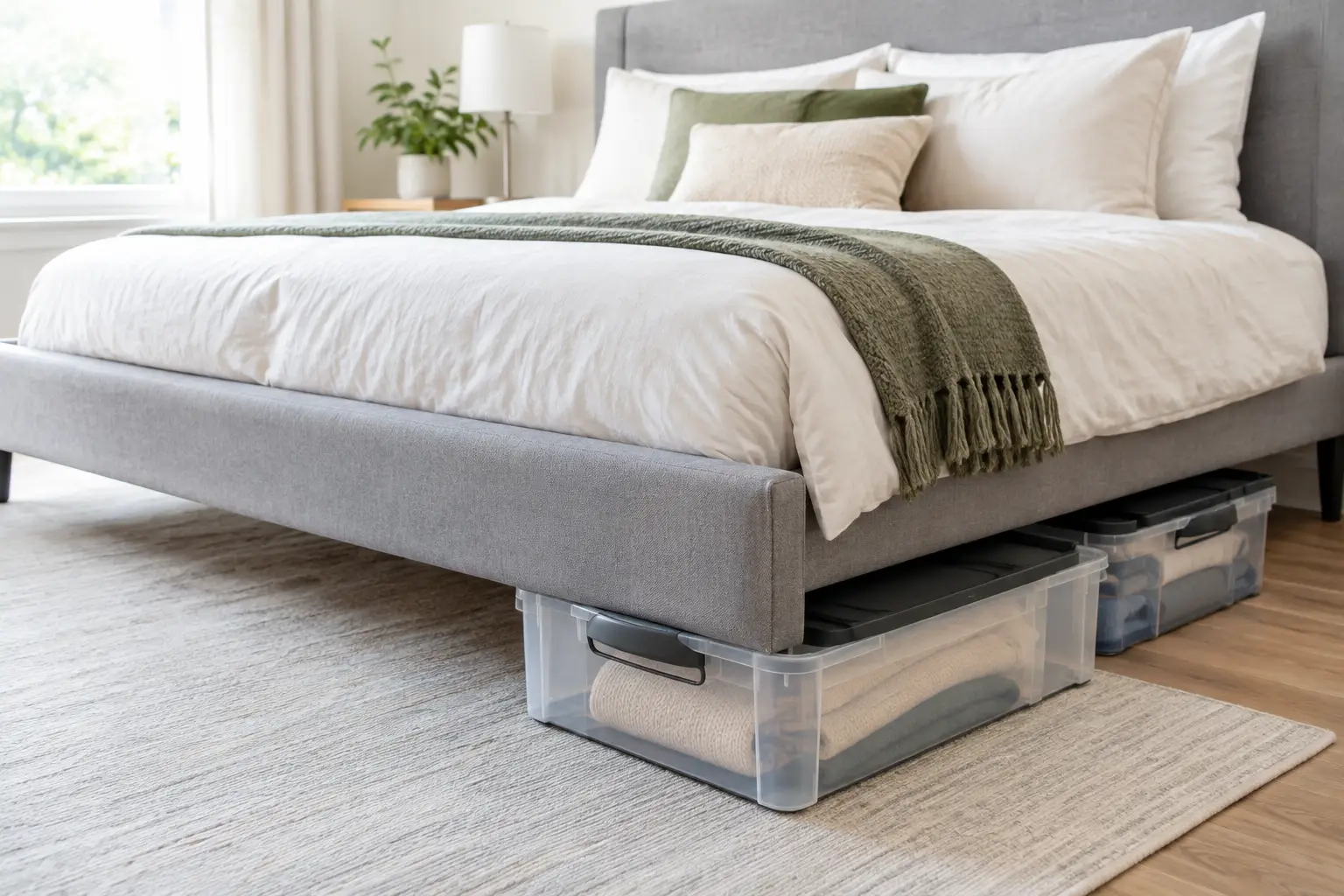
The space under your bed can hold far more than dust bunnies and a forgotten slipper. The best under bed storage turns that overlooked square footage into a practical home for off-season clothes, spare bedding, shoes, and the things you need nearby but not every day. The trick is choosing a storage style that fits your bed frame, your floor, and what you actually plan to put inside.
A cheap container that cracks, catches on carpet, or requires you to unload half its contents to find one sweater is not much of a deal. Start with the right format, then watch for a meaningful markdown on a piece you will keep using.
What Makes the Best Under Bed Storage?
The best option is rarely the largest one. It is the one you can slide out easily, open without frustration, and use consistently. Before shopping, measure the clearance from the floor to the bottom edge of your bed frame. Do not estimate. A storage bin that is even half an inch too tall becomes an instant return.
Also measure the usable width and depth beneath the bed, especially if center support legs, a rug, or a low-hanging bed skirt take up room. Most under-bed storage is shallow and wide, but dimensions vary enough that a quick measurement saves time and shipping headaches.
Think about access, too. If you will pull the container out every week, wheels or handles matter. If you only need it twice a year for winter blankets or summer clothes, a zippered fabric bag may be all you need. For many households, two or three matching containers work better than one oversized unit because they are easier to move, sort, and clean around.
Best Under Bed Storage Types for Different Needs
Rolling plastic bins for frequent access
Low-profile plastic bins with wheels are the dependable choice for clothes, kids' toys, craft supplies, and extra towels. Their rigid sides protect contents from crushed corners, and clear plastic lets you see what is inside without opening every lid.
Look for a snug-fitting lid and recessed wheels rather than bulky casters that add unnecessary height. Handles should feel solid enough to pull across your flooring. On hardwood or laminate, most rolling bins glide well. On thick carpet, they may drag, so a bin with a broad pull handle can be more useful than tiny wheels.
Plastic is also the simplest option for homes where dust, pets, or basement-like humidity are concerns. It is easy to wipe down and gives linens and clothing more protection than an uncovered basket or loose fabric bag.
Zippered fabric bags for soft, bulky items
Fabric under-bed bags are made for items that compress well: comforters, blankets, pillows, seasonal clothing, and guest linens. They are lightweight, usually fold flat when empty, and can fit beneath beds with limited clearance.
The trade-off is protection. A thin bag will not stop heavy items stacked on top from flattening what is inside, and it offers less defense against moisture or curious pets. Choose a structured fabric organizer with reinforced sides if you want it to keep its shape. A clear top panel is helpful, but only if the zipper and seams appear sturdy.
For off-season textiles, fabric bags are often the best value because rigid bins take up more room even when they are not full. Add simple labels to the handles so you do not have to unzip every bag when the weather changes.
Divided organizers for shoes and accessories
Shoes create clutter fast because they are awkward to stack and easy to lose in a deep bin. A divided under-bed shoe organizer gives every pair a defined spot, which makes it a better fit for flats, sandals, sneakers, and smaller kids' shoes.
Check compartment size before buying. Many organizers are designed around lower-profile shoes and may not accommodate boots, bulky athletic shoes, or men’s larger sizes. If your collection includes taller footwear, a clear lidded bin is usually more practical.
These organizers can also work for handbags, winter hats, scarves, or folded workout gear. Their best use is anything you want separated rather than piled together.
Wood or upholstered drawers for a finished look
If your bedroom is short on furniture storage, purpose-built under-bed drawers can feel more like part of the room than a storage workaround. They are a strong choice for guest rooms, small apartments, and bedrooms where the bed is visible from several angles.
These drawers cost more and demand more exact measurements. They also work best on smooth floors with enough clearance to pull them out. Still, when found at a substantial discount, a well-made set can replace a small dresser or free up closet shelving. That is often a better long-term buy than repeatedly replacing flimsy containers.
Choose Materials Based on What You Store
Plastic, fabric, and wood each solve a different problem. Clear plastic is best when visibility and dust protection are the priority. Fabric is best when you need flexibility and want to store lightweight, soft goods. Wood, bamboo, or upholstered drawers are best when appearance matters as much as capacity.
For delicate clothing, avoid stuffing containers to the point that zippers strain or lids bow. For extra bedding, choose a container with a little breathing room rather than forcing a comforter into the lowest-profile bag you can find. Compression can save space, but it can also leave bulky fills misshapen if they stay packed too tightly for months.
If you store items near a pet bed or in a room with high humidity, choose a sealed plastic option and make sure everything is completely dry before it goes underneath. Under-bed storage is out of sight, which means small dampness problems can go unnoticed longer than they would in a closet.
Details That Are Worth Paying For
Not every upgrade matters, but a few features genuinely change how useful under-bed storage feels. Prioritize these when comparing similar options:
- A low profile that leaves at least a little clearance under your bed
- Sturdy handles or a full-width pull strap
- A secure lid or smooth zipper that keeps out dust
- Clear panels or label holders for quick identification
- Wheels that are appropriate for your flooring
Skip flashy features that solve a problem you do not have. For example, vacuum-seal bags can be useful for a small closet, but they are less convenient if you regularly swap out clothes. Elaborate dividers are great for shoes and accessories but waste space for blankets. The right storage earns its place by making everyday organization easier, not by adding more parts to manage.
How to Shop for Under-Bed Storage at a Good Price
Storage products go on sale often, but the lowest price is not always the best buy. Compare the actual capacity, materials, and included pieces. A two-pack of sturdy rolling bins may cost more upfront than a single fabric bag, yet offer better value if you need durable storage for years.
Pay attention to the original price, not just a sale badge. A worthwhile deal is a meaningful reduction on a known brand or a well-reviewed, practical design, not an inflated list price attached to a weak product. This is where a curated approach helps: fewer options, cleaner comparisons, and less time sorting through storage that looks good in photos but does not fit real life.
For households building out a bedroom, wait for larger home-organization promotions when possible. Buying matching containers at once can create a cleaner look and make it easier to rotate items between seasons. Dealzland focuses on home finds marked down 30% or more, which is the kind of threshold worth watching for on storage you plan to use for years.
Set It Up So It Stays Organized
Under-bed storage works best when it has a clear job. Keep everyday items closer to the side you use to make the bed, and put seasonal or backup items toward the center or far side. Do not mix categories just because there is extra room. A bin labeled “winter linens” is useful; a bin holding one blanket, three shoes, old cables, and gift wrap is future clutter.
Use simple labels even with clear containers. You will save time when you are looking from above or pulling a bin out only partway. Once or twice a year, pull everything out, vacuum underneath the bed, and reassess what is still worth storing.
The right under-bed container does more than hide extra stuff. It gives useful belongings a dependable place, leaves your closet easier to use, and makes a small bedroom feel noticeably less crowded.