Cookware Deals Worth Buying, Not Just Cheap
July 17, 2026
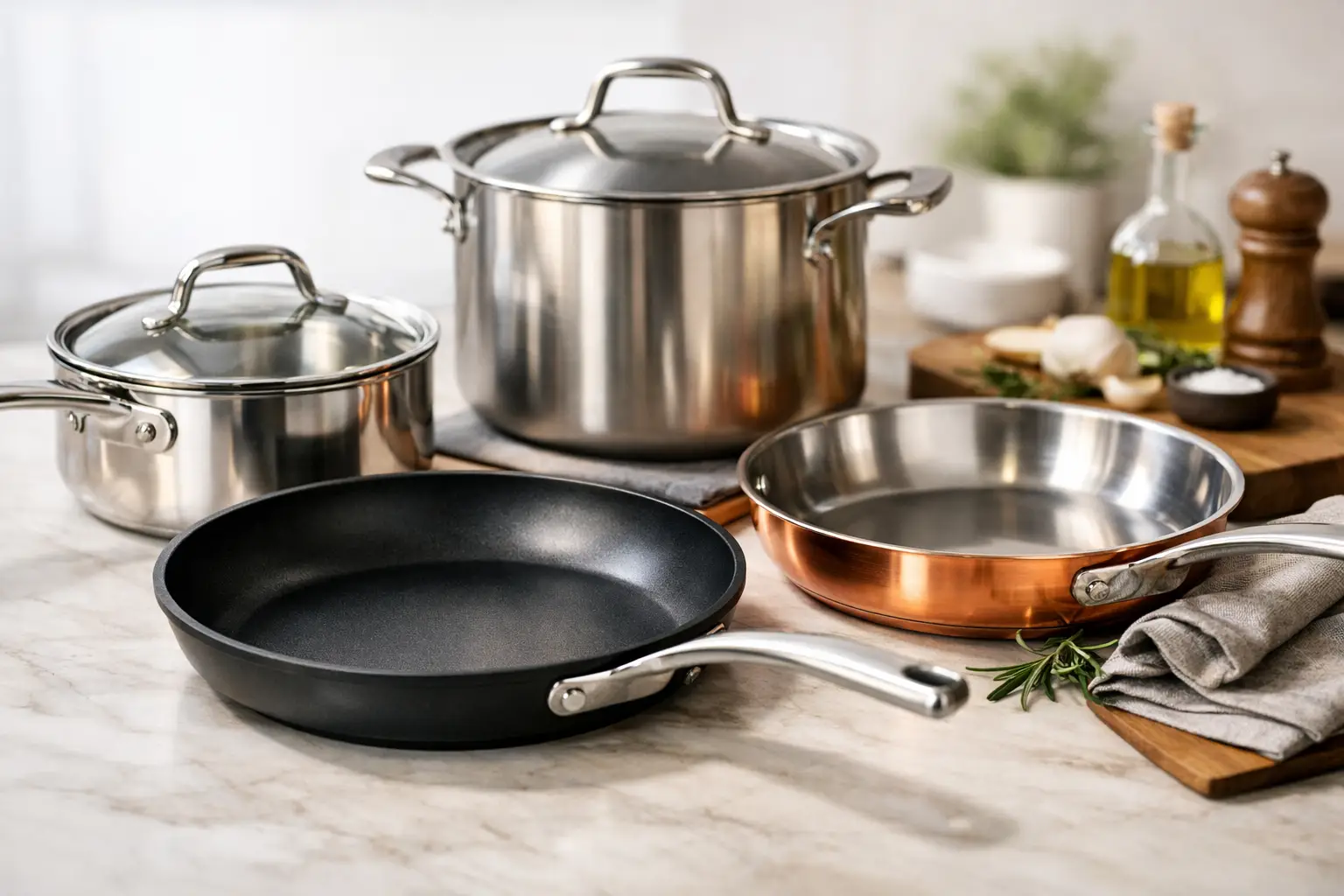
A 12-piece cookware set marked down 60% can look like a kitchen win until you realize half the pieces are tiny saucepans, flimsy utensils, or pans that will warp by next year. The best cookware deals worth buying solve a real cooking need, come from a dependable line, and cost meaningfully less than the price shoppers usually pay.
That is the difference between a deal and clutter. A great pan gets used every week. A so-so bargain gets pushed to the back of a cabinet, where it takes up space and quietly costs more than it saved.
What Makes Cookware Deals Worth Buying?
Start with the item, not the discount badge. A deep discount is useful only when the cookware fits the way you cook. If you make eggs, grilled cheese, and weeknight vegetables, a good nonstick skillet may be a smarter purchase than a massive stainless set. If you regularly sear meat, simmer sauces, or cook for a family, durable stainless steel or enameled cast iron may earn its cabinet space faster.
Look at the price against the product's typical selling price, not just the retailer's crossed-out list price. Cookware is frequently promoted, especially around holiday weekends, wedding season, and major retailer sales. A set advertised as 50% off may return to that sale price every few weeks. A 30% or greater reduction from the normal street price is a better sign that you are seeing a meaningful offer.
At Dealzland, the filter is simple: substantial discounts are only the starting point. The item should also be useful, recognizable, and actually worth keeping. That mindset works particularly well in cookware, where one excellent skillet can be more valuable than a bargain-bin collection of ten pieces.
Buy the Material That Matches Your Kitchen
The right material depends on your stove, cooking habits, and tolerance for maintenance. There is no universal best option, but there are clear reasons to choose one over another.
Stainless steel for everyday durability
Clad stainless steel is one of the safest buys when the price is right. It handles high heat, browns food well, works with metal utensils, and can last for years. Look for fully clad construction when possible, meaning the heat-conducting aluminum core runs up the sides rather than sitting only in a bottom disc.
Stainless is not naturally nonstick, so it takes a little technique and enough preheating oil. It is a better deal for shoppers willing to learn than for someone who wants every egg to slide out with zero effort. Individual stainless skillets, sauté pans, and stockpots often make more sense on sale than an oversized set.
Nonstick for low-fuss cooking
A nonstick skillet is a practical kitchen staple, especially for eggs, pancakes, fish, and quick lunches. But it is also the category where shoppers should avoid paying premium prices based on branding alone. Even well-made nonstick coatings have a shorter usable life than stainless or cast iron.
Shop for a sturdy base, a comfortable handle, and oven safety that matches your routine. Skip a deal if the only appeal is a big piece count. Two useful frying pans or a skillet-and-saucepan pair can be a better buy than a full set with pieces you will never reach for.
Cast iron and enameled cast iron for slow-and-steady value
Bare cast iron is often affordable even before a sale, making a deep discount on a well-regarded skillet, Dutch oven, or griddle especially compelling. It holds heat beautifully and can last decades with basic care. The trade-off is weight, plus the need to dry and maintain it properly.
Enameled cast iron is easier for acidic braises, soups, and sauces, and it moves neatly from stovetop to table. Quality matters here. Check that the pot has a snug-fitting lid, smooth enamel, and handles you can grip with oven mitts. A discounted Dutch oven is worth considering when it replaces a smaller, less capable pot you already own.
Hard-anodized aluminum for a practical middle ground
Hard-anodized cookware often offers even heating and lighter handling than cast iron, with many pieces finished in nonstick coating. It can be a strong value category during sales, particularly for households replacing worn everyday pans. Confirm induction compatibility if you have an induction range. Not every aluminum pan will work on it.
Sets vs. Open Stock: Do the Math Before You Buy
Cookware sets are designed to look like the biggest value, and sometimes they are. They make sense for a first apartment, a new home, a wedding gift, or a kitchen reset where you truly need multiple pieces at once. A discounted set is also convenient when every pot and pan is from the same dependable collection.
But count usable pieces honestly. Retailers may count lids, utensils, or tiny specialty pans to make a set sound larger. A 12-piece set may contain only five vessels and five lids. That is not necessarily bad, but it changes the value calculation.
Open-stock deals are often the more disciplined choice for established kitchens. Consider the gap you are trying to fill: perhaps a 12-inch skillet for family meals, a 3- to 4-quart saucepan for pasta and grains, or a 6-quart Dutch oven for soups. Buying one strong piece at 40% off can beat buying a set at 55% off when most of the set duplicates what you own.
A Quick Check Before You Add It to Cart
Before committing to a cookware deal, use this short filter:
- Check your cooktop. Induction requires magnetic cookware, while glass cooktops benefit from flat, stable bases.
- Check the dimensions. A 10-inch skillet and a 12-inch skillet serve different households. Measure cabinet and oven space for large pots.
- Check care requirements. Dishwasher-safe can be convenient, but hand-washing may extend the life of many nonstick and clad pieces.
- Check what is included. Confirm lids, handles, utensils, and specialty pieces rather than relying on the set count.
- Check the return policy. This matters for heavy cookware, where handle comfort and weight are hard to judge from photos.
Also pay attention to warranties, but do not let one decide the purchase. A long warranty does not automatically cover normal wear on nonstick surfaces, cosmetic changes to stainless steel, or damage from improper care. Read the practical limits, then decide whether the cookware still makes sense at the sale price.
When a Famous Brand Is Not the Best Deal
Recognizable brands can be reassuring, particularly for stainless steel and enameled cast iron, but name recognition should not replace product details. Some brands have entry-level lines made for high-volume promotions, while less flashy collections may offer better construction at the same price.
Look for useful specifications: thickness, fully clad versus impact-bonded base, oven-safe temperature, lid material, and compatibility with your range. Reviews are most helpful when they describe long-term use, such as warping, sticking, chipped enamel, loose handles, or how the pan performs after several months.
A lesser-known brand can be worth the deal when the construction is clear, the retailer has a solid return process, and the price is low enough to justify trying it. For a forever-piece purchase, such as a premium stockpot or Dutch oven, paying a little more for established performance may be the smarter long-term savings move.
The Best Times to Watch for Cookware Markdowns
Cookware deals tend to improve around major holiday sales, Black Friday, Presidents Day, Memorial Day, and Labor Day. Wedding registry season can also bring useful set discounts, while retailers often clear colors and older collections when new lines arrive.
Still, timing should not pressure you into a purchase. If the deal is not on a piece you need, it is not your deal. Keep a short wish list with the exact cookware gaps in your kitchen and a price range you would feel good about. Then a real markdown is easy to recognize when it appears.
The goal is not to own every pan a retailer can bundle together. It is to build a kitchen where each piece earns its spot, cooks reliably, and leaves more room in your budget for the groceries that go in it.