Cookware Materials Comparison That Saves Money
October 20, 2026
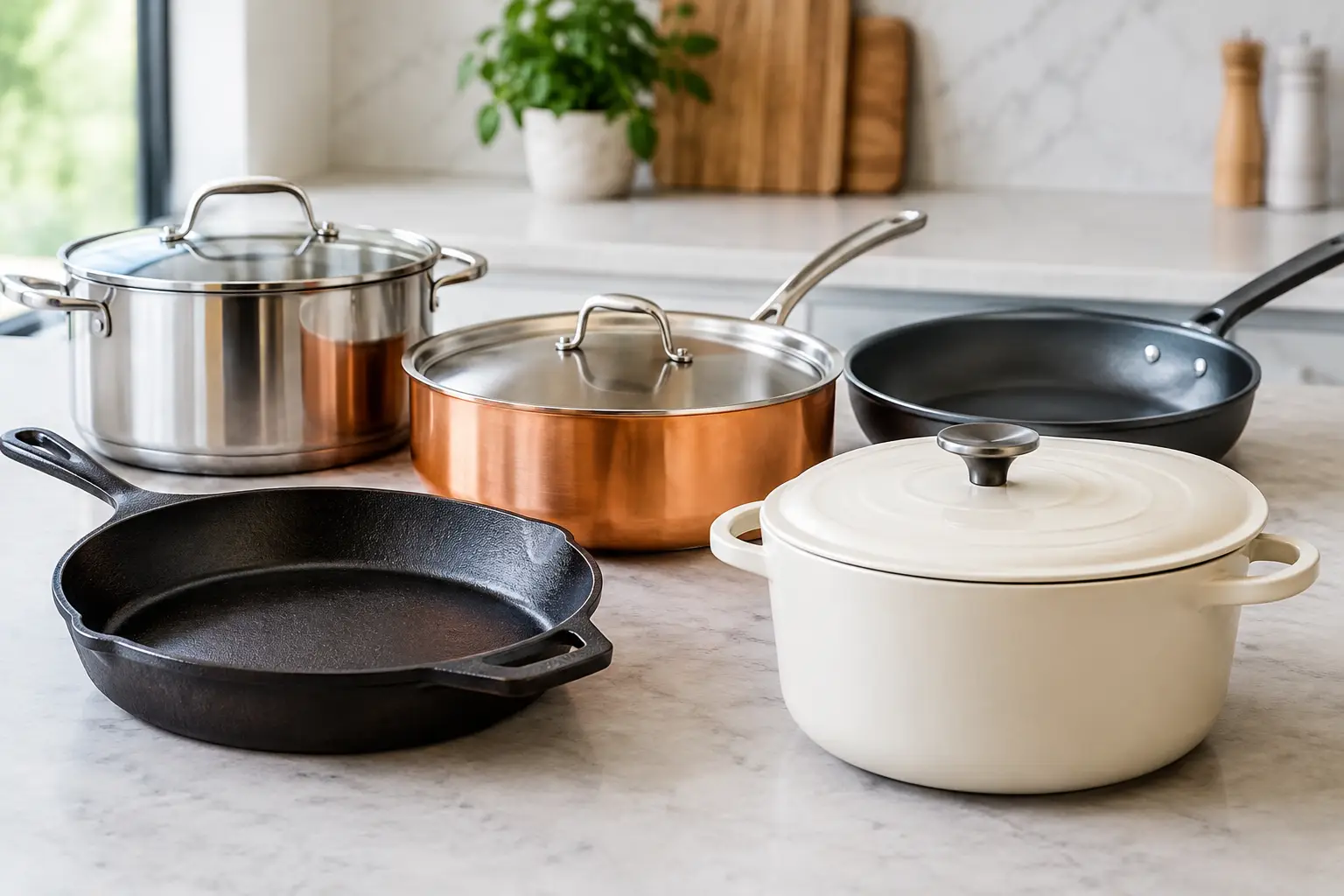
A 50% off skillet is not automatically a good deal. If it warps after a few high-heat dinners, loses its coating in a year, or will not work on your induction cooktop, the low price stops looking so low. This cookware materials comparison focuses on what each pan material does well, where it falls short, and which sale prices are actually worth keeping.
For most kitchens, the smartest move is not buying a matching 12-piece set in one material. It is building a small, useful mix: a dependable stainless steel pan, one easy-release nonstick skillet, and perhaps cast iron or carbon steel for high-heat cooking. The right balance depends on what you cook, how much maintenance you will realistically do, and what your stovetop can handle.
Cookware Materials Comparison at a Glance
Cookware material affects heat control, durability, cleanup, weight, and price. It also affects whether a pan solves a real kitchen problem or just takes up cabinet space.
Stainless steel is the all-around workhorse. Nonstick makes eggs and delicate foods easier. Cast iron holds heat for searing and oven cooking. Carbon steel offers many cast iron benefits at a lower weight. Enameled cast iron is excellent for braises and soups, while copper and aluminum are prized for responsiveness but come with more specific trade-offs.
A sale is worth a closer look when the material matches the job you need done. A cheap stockpot with a thin base is still frustrating for simmering sauces. A premium nonstick pan is not automatically a forever pan, because every coating has a limited service life.
Stainless Steel: The Best First Upgrade
If you are replacing flimsy starter cookware, stainless steel is usually the best place to put more of your budget. Quality stainless pans are durable, nonreactive, and versatile enough for weeknight chicken, pan sauces, pasta, vegetables, and oven finishing. They are also generally dishwasher safe, though hand-washing helps preserve their shine.
The key detail is construction. Look for tri-ply or fully clad stainless steel, meaning an aluminum or copper core runs up the sides of the pan between stainless steel layers. This spreads heat more evenly than a disc attached only to the bottom. Fully clad cookware usually costs more, but it is often the kind of purchase that stays useful for decades.
Stainless steel has a learning curve. Food can stick when the pan is cold, overcrowded, or missing enough oil. Preheat it, add oil after the pan heats, and let proteins release naturally before turning. Once that habit clicks, stainless steel earns its place fast.
For a strong discount, prioritize a 10- or 12-inch skillet, a saucepan with a lid, or a stockpot. Those pieces do more work than extra gadgets in a large set.
Best for
Browning, searing, sauce-making, acidic foods, daily cooking, and shoppers who want one pan material that handles almost everything.
Watch for
Very lightweight stainless steel with no heat-conducting core. It can develop hot spots, scorch food, and feel disappointing even at a steep markdown.
Nonstick: Convenient, but Not a Lifetime Buy
A nonstick skillet is one of the most practical pans in a home kitchen. It makes eggs, pancakes, fish, and reheated leftovers easier with less oil and less cleanup. For busy households, that convenience is real value.
Traditional PTFE-based nonstick coatings are widely used and perform well when treated properly. Ceramic nonstick coatings appeal to shoppers who prefer a different coating type, but they often lose their slickness sooner than good traditional nonstick. Neither option should be expected to last like stainless steel or cast iron.
Avoid using high heat, metal utensils, abrasive scrubbers, and cooking spray that can leave residue. Even a well-made nonstick pan will eventually need replacing, so it makes sense to buy it on sale rather than paying luxury pricing for a category with a shorter lifespan.
A 10-inch or 12-inch skillet from a recognizable cookware brand at 30% off or more can be a smart pickup. Just skip oversized sets full of coated pots and pans you may not need. One or two nonstick skillets are usually enough.
Best for
Eggs, omelets, crepes, flaky fish, low-oil cooking, and fast cleanup.
Watch for
Deals that advertise a huge piece count while hiding small cooking surfaces, thin construction, or hand-wash-only care requirements that do not fit your routine.
Cast Iron: Low Cost, High Staying Power
Bare cast iron is one of the best values in cookware. It is affordable, nearly indestructible, oven safe, and excellent at retaining heat. Once fully heated, it gives steaks, burgers, cornbread, and roasted vegetables the kind of deep browning that lightweight pans struggle to produce.
The trade-off is weight and maintenance. Cast iron is slow to heat, can be heavy to lift, and needs drying after washing to prevent rust. Its seasoned surface improves over time, but it does require basic care. Clean it promptly, dry it thoroughly, and apply a very thin layer of oil when needed.
Cast iron is not ideal for long simmers with highly acidic ingredients, especially in a newer or poorly seasoned pan. Tomato sauce, wine-heavy braises, and citrus can affect the seasoning and sometimes pick up a metallic taste.
For most kitchens, a 10- or 12-inch skillet is enough. Because bare cast iron is already fairly affordable, a sale is a bonus, not a reason to buy three more pans than you can store.
Carbon Steel: A Lighter High-Heat Option
Carbon steel sits between stainless steel and cast iron. It can handle high heat, develops a natural seasoning, and becomes more nonstick with use. It is a favorite for searing, stir-frying, fried eggs once seasoned, and cooking on grills or in hot ovens.
Compared with cast iron, carbon steel heats faster and is usually lighter. Compared with stainless steel, it needs more care and is less forgiving with acidic foods. It may arrive with a protective coating that must be removed and seasoned before first use.
This is a good choice for shoppers who want cast iron performance but know a heavy skillet will stay in the cabinet. A discounted carbon steel skillet or wok can be especially useful if you cook at higher temperatures often.
Enameled Cast Iron: Great for Slow Cooking
Enameled cast iron has the heat retention of cast iron with a smooth, nonreactive interior. It is especially useful for chili, soup, beans, bread, braises, and tomato-based dishes. A Dutch oven can go from stovetop to oven to table, which makes it one of the few larger cookware purchases that can justify a meaningful sale price.
It is also heavy, and enamel can chip if dropped or treated roughly. While many pieces are technically dishwasher safe, hand-washing is kinder to the finish. Choose a size that fits how you cook. A 5- to 6-quart Dutch oven suits many households; bigger is not always better if you are cooking for two.
A deeply discounted enameled Dutch oven is worth considering when the lid fits well, the interior enamel looks even, and the brand has a solid reputation for quality control. Decorative color alone is not a reason to pay more.
Aluminum and Copper: Fast Heat, Specific Needs
Aluminum conducts heat very well and keeps cookware lighter and more affordable. Most aluminum cookware is anodized, coated, or clad inside stainless steel because bare aluminum can react with acidic foods. Hard-anodized aluminum is common in nonstick cookware and can offer good heating performance for the price.
Copper is exceptionally responsive. Turn the burner down, and the pan reacts quickly, making it appealing for delicate sauces and temperature-sensitive cooking. But it is expensive, requires polishing if you care about the exterior finish, and often needs a stainless or tin lining. It is better as a targeted purchase for serious cooks than as a default deal buy.
For both materials, check induction compatibility. Aluminum and copper alone do not work on induction unless the cookware includes a magnetic base.
How to Judge a Cookware Deal Before You Buy
Start with your cooking habits, not the percentage off. A 40% discount on a pan you use twice a year is less useful than 30% off a skillet that replaces one you reach for daily.
Check the cooking surface size, not only the overall diameter. Look at the base construction, handle comfort, lid quality, oven-safe temperature, and whether the pan works with your cooktop. Induction shoppers should verify compatibility rather than assuming a stainless exterior means it will work.
Then consider replacement cycles. Stainless steel, cast iron, carbon steel, and quality enameled cast iron can be long-term purchases. Nonstick belongs in a different category: buy a good one, care for it, and expect to replace it eventually. That distinction helps you spend more where longevity pays you back and save where it does not.
Dealzland’s practical rule applies well here: buy the good stuff for your home, for a lot less, but only when it will earn its cabinet space. The best cookware deal is the pan that makes dinner easier this week and is still useful after the sale sticker is long gone.