Do Air Fryers Save Energy? The Real Cost Math
October 30, 2026
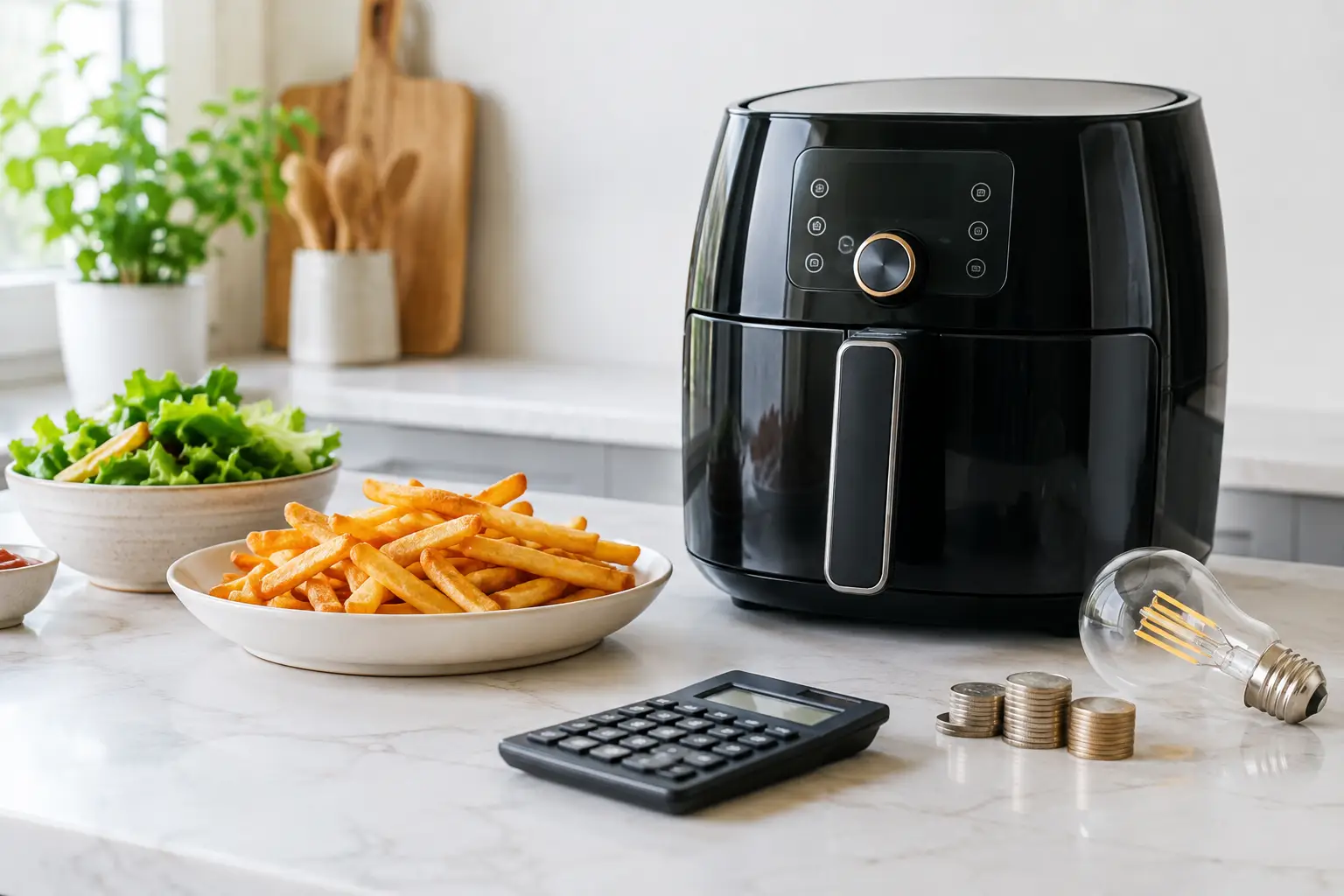
A full-size oven heating up for a handful of chicken tenders is a little like running the dishwasher for one coffee mug. So, do air fryers save energy? Usually, yes - especially for small meals, sides, and reheating. But the real savings depend on what you cook, how often you use it, your local electricity rate, and whether an air fryer replaces the oven or simply becomes one more appliance on the counter.
For practical households, the better question is not whether an air fryer is magically cheap to run. It is whether it can handle the jobs you currently give to a larger, slower appliance. When it can, the math is often in its favor.
Do Air Fryers Save Energy Compared With Ovens?
Air fryers are essentially compact convection ovens. A heating element warms a small chamber while a fan moves hot air quickly around the food. Because there is less space to heat and the circulating air speeds up cooking, most air fryers preheat faster and finish sooner than a conventional oven.
A typical basket-style air fryer may draw roughly 1,200 to 1,800 watts while it is actively heating. That number can look high on a product label, but wattage alone does not determine the cost. Cooking time matters just as much. Running a 1,500-watt air fryer for 15 minutes uses about 0.375 kilowatt-hours of electricity.
At an electricity rate of 16 cents per kilowatt-hour, that works out to about 6 cents. At 25 cents per kilowatt-hour, it is closer to 9 cents. Rates vary widely by state and utility plan, so think of these as useful ballpark figures rather than a promise on your next bill.
A standard electric oven commonly uses around 2,000 to 5,000 watts while its elements cycle on and off. It also needs time to preheat a much larger cavity. For a 15- to 25-minute cooking task, the oven may use noticeably more electricity, particularly if you preheat it fully. The difference is usually meaningful in frequent, small-batch cooking, not dramatic enough to transform a household budget overnight.
Gas ovens can complicate the comparison. They may use less electricity for heat, but they still consume fuel and can take longer to preheat. An air fryer can still be the more efficient choice for small jobs, though the dollar difference depends on local gas and electricity prices.
Where an Air Fryer Makes the Most Sense
The strongest energy case is cooking for one or two people, or making a small component of a meal. Think frozen fries, roasted vegetables, salmon fillets, chicken thighs, quesadillas, breakfast potatoes, or leftovers that need crisping rather than microwaving.
It is also a smart substitute during warm weather. Every minute a full-size oven runs adds heat to the kitchen, which can make your air conditioner work harder. That indirect cost is hard to calculate precisely, but anyone with a sunny kitchen in July understands the appeal of keeping the big oven off.
Air fryers also reduce the temptation to order takeout because the oven feels like too much work for a quick dinner. That is not an electricity calculation, but it can be the bigger savings. A compact appliance earns its counter space when it makes affordable home cooking easier on busy nights.
When the Savings Shrink
An air fryer is not automatically the most efficient option for every meal. Its small capacity is both its advantage and its limit. If you are feeding four or five people and need to cook in several batches, a large oven may use less energy overall than repeatedly running a small basket.
A crowded basket can also work against you. Food needs airflow to brown well. Overloading it may mean shaking, rearranging, and adding extra minutes - or cooking a second batch. For a family-size tray of vegetables, a sheet pan in the oven can be the simpler and more economical choice.
The same applies to dishes that need a Dutch oven, casserole dish, pizza stone, or a long, low cook. Air fryers are great at hot, fast cooking. They are not built to replace every oven task.
Countertop air fryer ovens deserve a separate mention. These models can be useful because they fit more food than a basket-style unit, but their larger chambers may reduce the energy advantage. They still often beat a full-size oven for moderate portions, yet the gap is not as wide. Check the interior capacity, wattage, and whether you would genuinely use the extra functions before paying more for a bigger machine.
The Cost Difference Is Real, but Usually Modest
It helps to keep the claim in proportion. If an air fryer saves 5 to 15 cents each time it replaces an oven, using it several times a week could save a few dollars per month. Over a year, that can add up, especially where electricity is expensive. But it will not recover the purchase price in a few weeks.
The better value comes from combining small energy savings with everyday usefulness. If the appliance helps you cook frozen food more evenly, revive leftovers without turning them soggy, and make weeknight meals faster, it may be worth keeping even before you count the utility bill.
On the other hand, buying an oversized model with features you never use because it is deeply discounted is not a bargain. A meaningful price drop matters, but so does choosing a size that matches your household. Dealzland's basic rule applies here: the best deal is a useful product at a strong price, not just the lowest price on the page.
How to Get the Most Energy Savings From an Air Fryer
Use the air fryer as a replacement, not an addition. If you run it for snacks while the oven is already on for dinner, you are not reducing much. Reserve it for the smaller jobs that would otherwise require heating the whole oven.
Skip unnecessary preheating when the recipe allows. Many air fryers heat quickly enough that a long preheat adds little. A few recipes benefit from two or three minutes of preheating for better browning, but the 10-minute oven habit does not always transfer.
Cook enough food for the meal without packing the basket solid. A single well-spaced batch is more efficient than two tiny batches, while an overcrowded basket can lead to longer cooking and disappointing results. For batch cooking, compare your total air-fryer time with a single oven session.
Keep the basket and tray clean. Grease and burnt crumbs can create smoke, odors, and uneven airflow. A clean appliance performs better, and you are less likely to abandon it for the oven after a few frustrating uses.
Finally, choose a model with the capacity you will actually use. A compact 3- to 4-quart unit can be enough for one or two people. Families may do better with a 6-quart basket or a dual-basket model, but only if they will use both zones regularly. Bigger is not always better when the goal is efficient cooking.
What to Look For Before You Buy
Price is only one part of the decision. Look for an air fryer with a basket that is easy to wash, controls you can read without squinting, and a shape that fits where you plan to store it. If it is awkward to clean or too bulky for the counter, it is more likely to become an expensive cabinet resident.
For energy-minded shoppers, capacity and cooking habits matter more than chasing the lowest listed wattage. A lower-watt unit that takes much longer to cook may not save more. Look for reliable temperature controls, a basket that promotes airflow, and a size suited to the portions you make most often.
Dual-basket models are convenient for cooking a protein and side at the same time, but they are not automatically the lowest-energy choice. They work best when both baskets are used together. If you mostly cook one serving of fries or reheat lunch, a simpler single-basket model may be the smarter buy.
Air fryers save energy most reliably when they replace a preheated full-size oven for quick, small meals. Buy for that job, use it often, and let the savings come from fewer oven cycles, faster dinners, and an appliance that is actually worth keeping.